JUL 22, 20266 mins min read
Meta's Algorithm Just Got Smarter. Here's What That Means for New Campaigns
Meta quietly changed how it finds buyers and counts conversions in 2026. What it means when you're launching cold.

Meta's targeting has been quietly rebuilding itself for the last 18 months. Most people running ads haven't noticed because it doesn't show up as a new button in Ads Manager. It shows up in whether your cold campaigns find buyers or just collect clicks.
Two things happened recently that matter if you're launching new campaigns right now.
What Meta actually changed in its algorithm
Meta published a research paper in July 2026 called Hierarchical Interest Representation. Long name, simple idea: the system that matches your ad to a person just got significantly smarter about understanding latent intent.
Previously, Meta's targeting relied heavily on direct engagement signals. Someone watched a video about running shoes, so they see your running shoe ad. Simple, but shallow. The problem is that most people who will actually buy something from you have never engaged with anything obviously related to your product. They're invisible to the old system.
What the new system does is map user interests across a massive graph of behaviors, then cluster those into something Meta calls "Bag-of-Meaning tokens." It uses multimodal LLMs to understand what a product actually is from the advertiser's catalog, then connects it to users who have never directly expressed interest but whose behavior pattern suggests genuine latent demand.
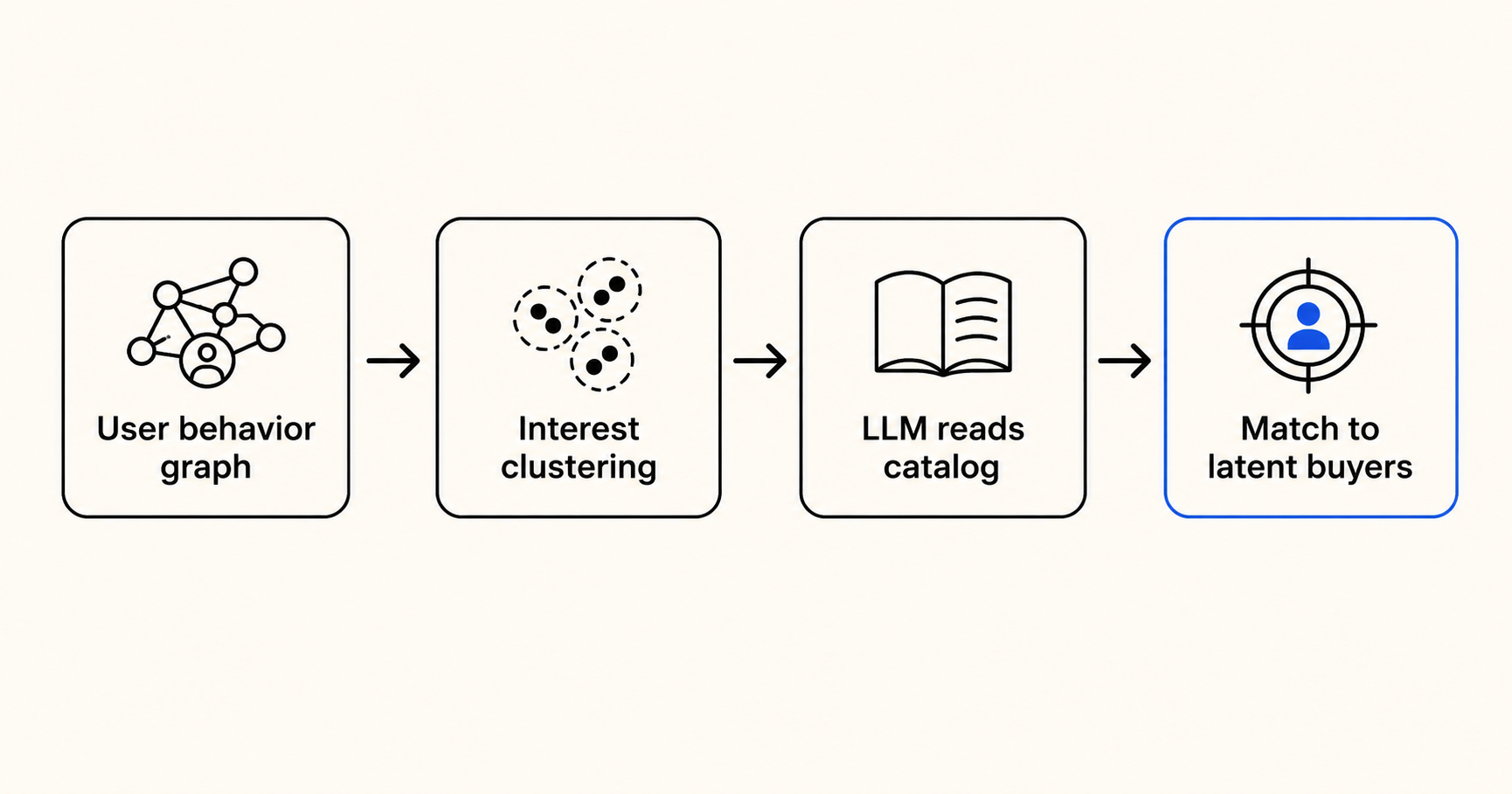
The practical implication: Advantage+ campaigns, especially those optimizing for deep-funnel events like purchases and lead form submissions, are now finding buyers the old interest-targeting system simply couldn't reach. The system is also designed to work better with sparse signal. Meaning your new campaign with zero conversion history gets a more informed starting point than it did before.
The attribution change that's confusing everyone's data
Separately, Meta changed how it counts conversions in March 2026. This one is quieter but it's wrecking campaign reads for a lot of people.
Click-through attribution now counts only actual link clicks. If someone expanded your ad, watched 6 seconds of video, then came back and bought three days later, that conversion moved out of your click-through column and into a new bucket called "engage-through attribution."
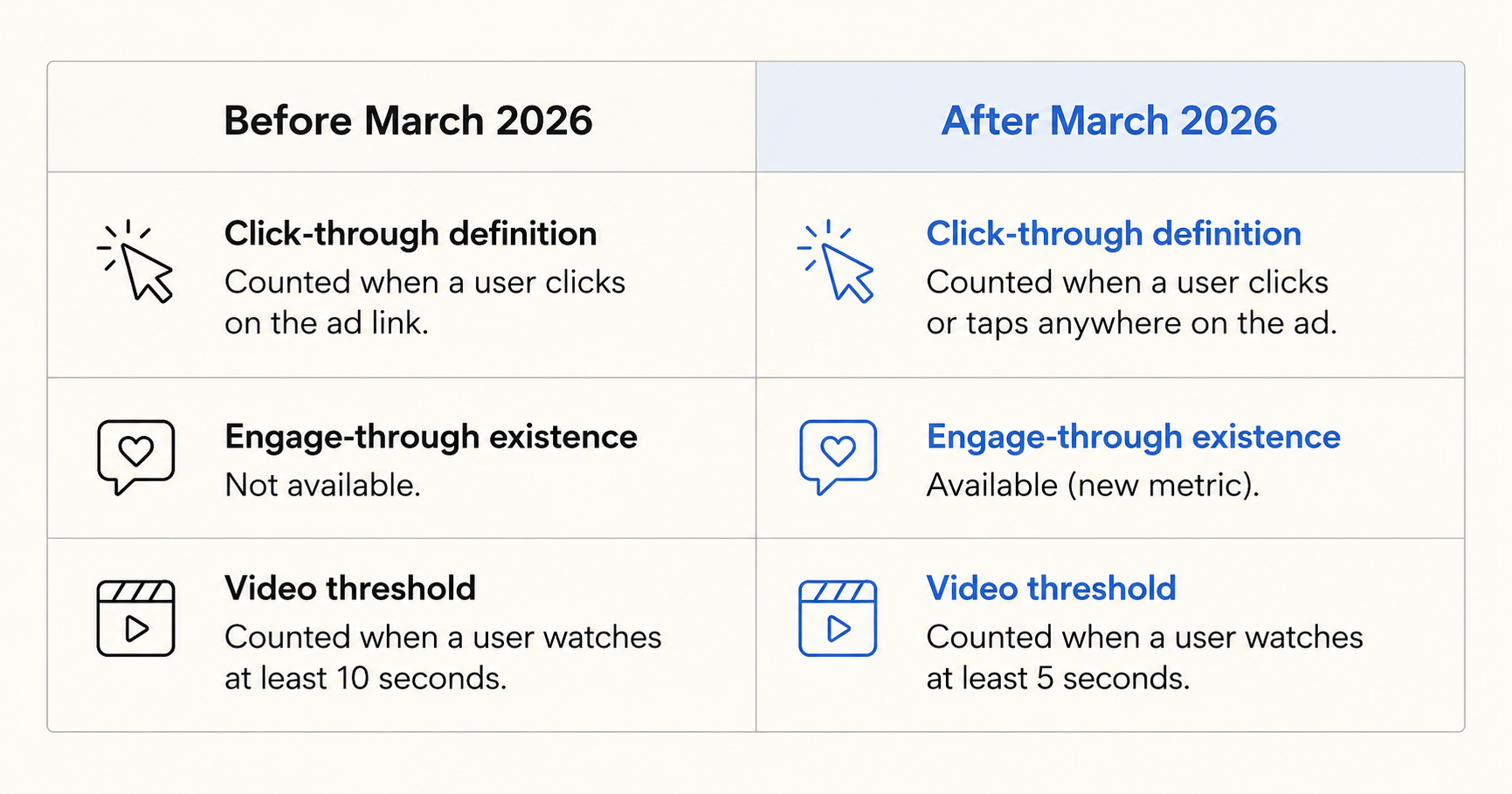
The video threshold for engage-through also dropped from 10 seconds to 5 seconds.
So if you launched a campaign before March and your numbers looked strong, then they dropped after March, check engage-through before panicking. Meta didn't change what it was delivering. It changed where it's counting the credit.
Meta has confirmed billing didn't change. Just the reporting buckets.
What this means when you're launching something cold
Both of these changes point in the same direction: Meta's system wants you to give it more room to learn, and it's more capable of learning than it used to be.
A few things I'd change about how I approach new campaign launches given what's happened:
Trust Advantage+ Shopping more on cold campaigns, especially for purchase objectives. The hierarchical interest system is specifically designed to find buyers with sparse data. Give it a 7-10 day learning window before adjusting.
Don't diagnose early numbers against pre-March benchmarks. If your click-through conversions look lower than expected, check your engage-through column before touching the campaign. The total may be perfectly fine.
Don't layer manual interest targeting on top of Advantage+ out of anxiety. The whole point of the new system is that it's finding interest signals your manual targeting couldn't identify. Adding narrow audience constraints limits exactly the behavior you're paying for.
Start with a broader creative set. The new system routes ads based on semantic understanding of your product against a user's latent interest graph. Three creative angles that speak to different underlying motivations will teach the system faster than five variations of the same message.
I'm not sure most advertisers have fully absorbed the attribution change yet. A lot of the "Meta stopped working" conversations I see are probably reading a reporting artifact as a performance problem. Worth checking before you rebuild your campaign.
Working with a D2C brand?
If the numbers aren't adding up, that's usually fixable.
I take on a small number of D2C clients for paid acquisition, funnel work, and growth audits. If you're spending on Meta or Google and the economics feel off, email me. I'll tell you honestly what I see.
See how I work →