AUG 08, 20265 mins min read
COD vs Prepaid: What the Numbers Actually Look Like for Indian D2C Brands
COD vs prepaid for Indian D2C brands: the real cost breakdown, RTO impact on margins, and how to move your prepaid ratio without killing conversions.

Every D2C founder in India starts with COD enabled because it feels like the safer choice. More orders, more customers, less friction. The numbers tell a different story.
I've seen brands running 70% COD ratios wonder why they're cash-flow negative despite decent order volumes. The math on COD is brutal once you actually sit down and work it out.
What COD actually costs you
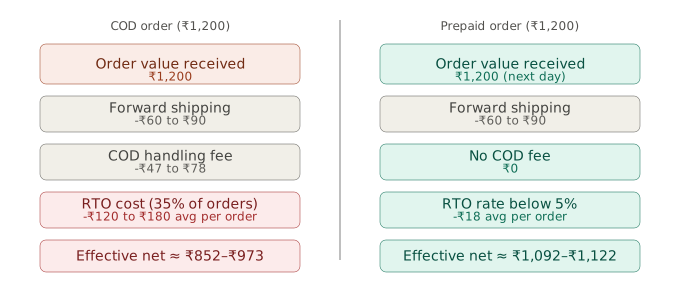
Take a ₹1,200 order. COD charges from most logistics partners run between ₹35 to ₹60 per order plus 1% to 1.5% of the order value. So you're paying roughly ₹47 to ₹78 just to collect your own money. On top of that, the remittance cycle is 7 to 10 days depending on the courier. That's your cash sitting with Delhivery or Shiprocket for over a week before it hits your account.
Now add RTO. Industry average RTO on COD orders in India runs between 25% to 40% depending on category and geography. Fashion and lifestyle brands sit closer to 35%. Each returned order costs you forward shipping, return shipping, and the COD handling fee and you get nothing back except a product that may now have packaging damage.
On that same ₹1,200 order with a 35% RTO rate, your effective revenue per 100 orders is not ₹1,20,000. It's closer to ₹78,000 after returns, and your actual shipping cost for those 100 orders including returns was somewhere around ₹14,000 to ₹18,000. The margin compression is real.
Prepaid is not just about saving money
The obvious benefit is no RTO on prepaid. A customer who has already paid almost never returns the order without opening it. RTO on prepaid orders typically sits below 5% for most D2C categories.
But the less obvious benefit is cash flow. Prepaid money hits your payment gateway the same day. Razorpay or Cashfree settles in 2 to 3 days. Compare that to 7 to 10 days on COD remittance and the difference compounds fast when you're running ₹5 to ₹10 lakh a month in revenue.
The problem is conversion. Prepaid-only stores in India consistently see 15% to 25% lower conversion rates compared to stores offering COD, especially for new brands with no established trust. A customer who has never heard of you is not going to punch in their card details for a ₹1,500 bag without some hesitation.
What actually works
The brands that manage this well don't choose one or the other. They nudge customers toward prepaid without removing COD entirely.
The most common approach is a prepaid discount. Offer ₹50 to ₹100 off for prepaid at checkout. This does two things: it gives the customer a real reason to pay upfront, and it self-selects for more serious buyers. Someone who takes the prepaid discount is significantly less likely to return the order.
A second approach is COD on select products only. If you have a product above ₹2,000, the RTO risk on COD gets expensive fast. Cap COD availability at ₹1,500 or below and push everything above that to prepaid-only or offer a larger prepaid discount.
Third, look at your COD ratio by geography. Tier 1 cities in India have meaningfully lower RTO rates than tier 2 and tier 3. Some brands disable COD entirely for pin codes with historically high return rates. Most logistics partners can give you this data if you ask.
The number to track
Prepaid percentage is the metric. Not total orders, not revenue. What percentage of your orders are prepaid.
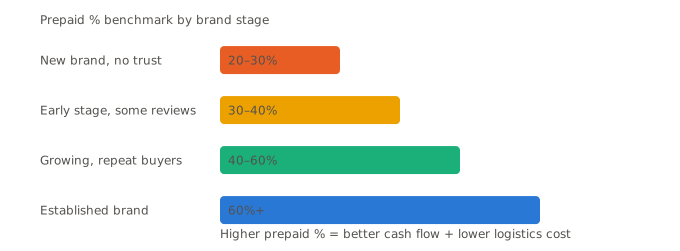
A healthy D2C brand in India typically runs 40% to 60% prepaid once it has some brand recognition. Early stage brands with no trust signals sit at 20% to 30%. If you're above 60% prepaid without offering heavy discounts, your brand trust is strong and you can probably tighten your COD terms further.
Track this number weekly. Every percentage point shift toward prepaid directly improves your cash flow cycle and reduces your logistics cost. A brand moving from 30% prepaid to 50% prepaid on ₹30 lakh monthly revenue is recovering roughly ₹2 to ₹3 lakh in previously tied-up cash every month.
One thing most founders do too late
Analyze your RTO by traffic source. COD orders from Meta ads typically have higher RTO than orders from organic search or direct traffic. A customer who found you through Google and placed a COD order is more intentional than someone who impulse-clicked a reel at 11pm. If your Meta COD RTO is above 40%, that changes the math on whether that campaign is actually profitable even if the ROAS looks decent on paper.
Run the numbers before you scale anything.
What's your current prepaid ratio and what have you tried to move it?
Working with a D2C brand?
If the numbers aren't adding up, that's usually fixable.
I take on a small number of D2C clients for paid acquisition, funnel work, and growth audits. If you're spending on Meta or Google and the economics feel off, email me. I'll tell you honestly what I see.
See how I work →