JUN 02, 20266 mins min read
D2C Shipping Costs in India: What Courier Bills Actually Look Like at Scale
Forward shipping, COD remittance delays, return costs, weight discrepancies — most D2C founders model one of these. Here's what all four look like together.
Everyone who starts a D2C brand in India runs the same calculation.
Product cost. Packaging. Ad spend. Selling price. The math works. The margin looks real. You place the first inventory order feeling like you've figured something out.
Then you actually start shipping.
The number nobody puts in the model
Shipping in India isn't one cost. It's four.
There's the forward shipping charge -- what you pay to get the order to the customer. There's the COD remittance fee -- what the courier charges to collect cash on delivery and transfer it back to you, which takes anywhere from 7 to 15 days depending on who you're using. There's the return shipping charge -- what you pay when the customer isn't home, changes their mind, or just decides they don't want it anymore. And there's the weight discrepancy charge -- what couriers bill you when their volumetric weight calculation doesn't match yours.
Most first-time founders put one number in their model. The forward shipping charge. The rest shows up later as a surprise on the invoice.
By the time you add all four, you're looking at ₹120 to ₹180 per order in logistics costs for a standard 500g shipment, depending on zone. For a product selling at ₹799, that's 15 to 22% of revenue gone before you've accounted for anything else.
COD makes it worse
Around 60 to 65% of D2C orders in India are still cash on delivery. In some categories it goes higher.
This creates two problems that compound each other.
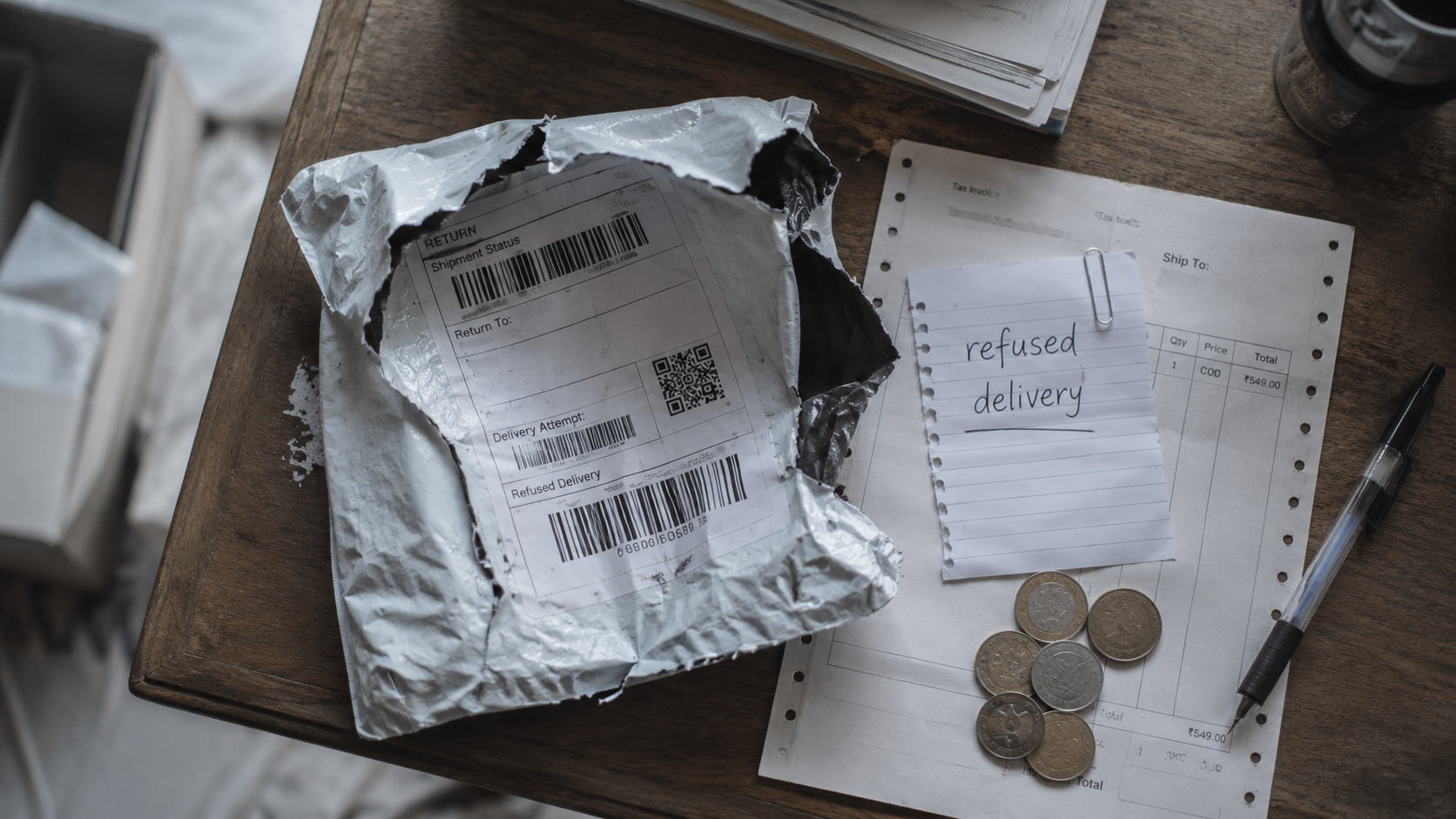
First, your return rate on COD orders is significantly higher than prepaid. Customers who haven't paid yet have no friction stopping them from refusing delivery. Industry averages sit around 25 to 35% return rates on COD for fashion and lifestyle categories. Some brands run higher.
Second, the cash is locked with the courier for up to two weeks. You've paid for inventory, packaging, and forward shipping. The customer has the product. You don't have the money yet. If you're running ads simultaneously, you're funding that gap from your own pocket.
For a brand doing ₹5 lakh a month in COD revenue, that's potentially ₹70,000 to ₹1 lakh sitting with a courier at any given time. Not lost. Just unavailable. For a bootstrapped founder that difference matters.
Returns are where the margin actually dies
A return isn't just a lost sale. It's a negative sale.
When an order comes back you've paid forward shipping to send it. You've paid return shipping to get it back. The product may come back damaged or used. The packaging is always unusable. You've paid the COD fee even if the customer refused at the door.
Total cost of a returned COD order, depending on your courier and zone: ₹150 to ₹250. On a product with a landed cost of ₹350 and a selling price of ₹799, one return wipes out the margin from two successful orders.
At a 30% return rate that math stops working very fast.
The zone problem
India has courier zones. The further the shipment travels from your warehouse, the more you pay.
Most brands warehouse in one or two cities. A significant portion of Indian D2C demand comes from tier 2 and tier 3 cities -- Indore, Surat, Jaipur, Lucknow, Coimbatore. These are often zone 4 or zone 5 shipments for brands warehousing in Delhi or Mumbai.
A shipment that costs ₹60 to deliver locally costs ₹110 to deliver across zones. The customer paid the same price. You absorbed the difference.
Brands that don't model zone distribution before launch often find that their actual average shipping cost is 30 to 40% higher than what they assumed based on local rates.
What actually helps
Prepaid discounts work. Offering ₹50 or ₹75 off for prepaid orders shifts a meaningful portion of customers away from COD. Lower return rates, faster cash, no remittance delay. The discount pays for itself quickly if your return rate differential is even half of what industry averages suggest.
Multi-courier setups help on cost but add operational complexity. The logic is sound -- route metro deliveries through one courier, long-distance through another, use a third for specific regions where they have better last-mile networks. In practice this requires software to manage and adds reconciliation headaches. Worth it at scale. Probably not worth it in the first six months.
Restricting COD to certain pin codes helps with return rates. You keep COD available where it's needed to drive conversions but cut it off for pin codes with historically high return or non-delivery rates. Most courier aggregators give you this data if you ask.
Warehousing closer to demand sounds obvious and is expensive to act on. Worth thinking about before you set up your first warehouse, not after.
The brands that survive Indian D2C long enough to build something real are almost never the ones with the best product or the best ads. They're the ones who modeled the logistics unit economics before they started and built the business around making those numbers work.
The ones who didn't find out around month three. Usually right after a good sales week that somehow still left them short on cash.
Working with a D2C brand?
If the numbers aren't adding up, that's usually fixable.
I take on a small number of D2C clients for paid acquisition, funnel work, and growth audits. If you're spending on Meta or Google and the economics feel off, email me. I'll tell you honestly what I see.
See how I work →